Munich Day Tours
I’m Serious Day Tour Man AI, your day trip expert. Ask me anything — where to go, how to get there, and what’s actually worth your day.
Munich’s headline day trip fails more visitors than any castle in Europe, and always the same way: they book the Neuschwanstein tour slot and not the ninety minutes it takes to reach the castle door from the village below. The full arithmetic is below, along with the day this list handles in its own register — Dachau, twenty-five minutes away and the most important entry here.
The rest of the radius: Germany’s highest mountain by cogwheel and cable, Ludwig’s unfinished Versailles on an island, and Mozart’s city ninety minutes down the line. The city block covers the beer-garden law that surprises everyone and the Glockenspiel honesty.
Here’s what’s worth a day, with real times and honest trade-offs.
Popular Day Trips

Neuschwanstein
Two hours out — the arrival math decides the day
Dachau
Twenty-five minutes away. Visited properly.

Garmisch & the Zugspitze
Germany’s highest meter, by cogwheel and cable

Chiemsee
Ludwig’s unfinished Versailles on an island

Salzburg
Mozart’s city, 90 minutes on the Bayern-Ticket

Regensburg
The medieval city the war passed by
Neuschwanstein — The Arrival Math
Two hours southwest (train to Füssen plus the local bus, or the direct coach tours), Ludwig II’s fantasy castle runs on mechanics that punish optimism. The rules: the interior goes only by guided or audio-guided tour at a fixed entry time, booked ahead on the official Hohenschwangau ticket shop — and the number that matters is the arrival math: plan to be in Hohenschwangau village 1.5 to 2 hours before your slot, because the castle sits a genuine 30–40 minute uphill walk above it (the shuttle bus and horse carriages shorten but don’t delete the climb, and both queue). Miss the slot and the tour is gone. Same-day leftovers sell from 8 a.m. at the Ticket Center only and vanish early in season; rucksacks and bulky bags don’t enter the castle at all.
The visit: the 30-minute tour covers the finished third — the Throne Hall’s Byzantine gold, the Singers’ Hall, the grotto — and the truth is that the exterior is the masterpiece: Marienbrücke, the bridge over the gorge, frames the postcard (check its status; it closes for maintenance and ice), and the walk beyond it up the Tegelberg path earns the less-photographed angles. Hohenschwangau Castle below — Ludwig’s actual boyhood home — pairs on the combined ticket with 2.5 hours between tours, and tells the story that makes Neuschwanstein make sense. Full committed day; the Füssen old town absorbs any spare hour.
Dachau — Visited Properly
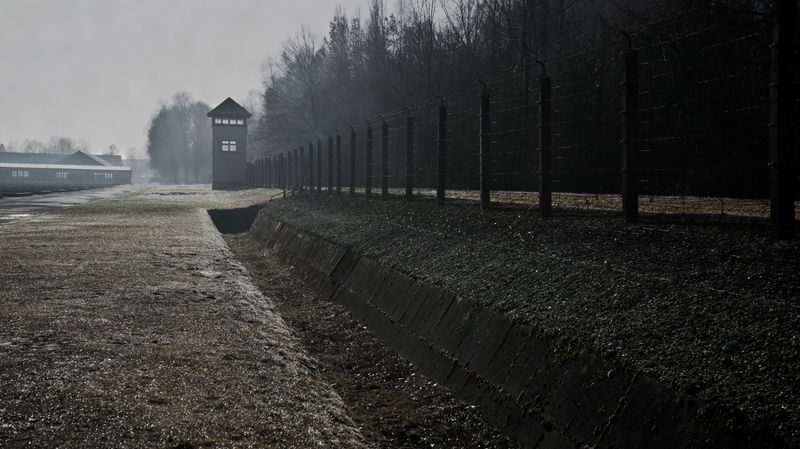
Twenty-five minutes northwest by S-Bahn and bus, the Dachau Concentration Camp Memorial Site preserves the first Nazi camp — opened in 1933, weeks into the regime, and the model on which the system was built. Over 200,000 people were imprisoned here; tens of thousands died. The visit is handled in the register the ground requires: unhurried, informed, and paired with nothing celebratory on the same day.
The mechanics: admission is free, the site is run by the memorial foundation, audio guides and the daily guided tours (small fee; the context they add is worth it) book through the visitor center, and the S2 to Dachau station plus the 726 bus reaches the gate without a tour. Allow three to four hours: the maintained grounds and reconstructed barracks, the bunker, the museum’s unflinching permanent exhibition, the religious memorials at the far end, and the crematorium area, which asks the most of visitors and receives the most silence.
The framing, stated plainly: the memorial’s own mission is “never again,” and it asks visitors for the conduct the site requires — restraint in photography, quiet through the crematorium and memorial spaces, and the understanding that this is an obligation of memory taken up voluntarily, not an attraction. The foundation discourages visits by young children. Give the afternoon after it no itinerary.
Read the full Dachau Memorial day-trip page.
Zugspitze & Partnach Gorge — The Top of Germany
Ninety minutes south, Garmisch-Partenkirchen anchors the alpine day, and the summit works in one loop: the cogwheel railway from town grinds up through meadows and tunnels to the Zugspitzplatt glacier plateau, the summit cable car finishes the last leap to 2,962 meters — Germany’s highest point, with a four-country panorama on clear days and a Biergarten that serves weisswurst above the clouds — and the record-setting Eibsee cable car drops you back down the sheer side to the lake in ten ear-popping minutes. Ride it as a circle: cog up, cable down (or reverse), with the turquoise Eibsee’s lakeside path as the built-in finale.
Three rules apply: weather decides everything (the summit webcams the morning-of are the vote that counts), the combined ticket covers the loop, summer weekends queue the cable cars by late morning, and the summit is winter at altitude in any month — the jacket rides along in August.
The valley’s second act: the Partnach Gorge, a 700-meter limestone slot the river has cut to shoulder width, walked on galleried paths behind waterfalls — a rain-proof spectacle twenty minutes’ walk from the Olympic ski stadium, and in winter a corridor of blue ice that locals rate above the summer version. The frame: mountain-plus-gorge is the full day; either alone leaves room for Garmisch’s painted houses and the drive home unhurried.
Read the full Garmisch & the Zugspitze day-trip page.
Chiemsee — Ludwig’s Island Versailles
An hour southeast, the Chiemsee — Bavaria’s largest lake — carries Ludwig II’s most literal fantasy: Herrenchiemsee, the Versailles copy he built on an island and barely lived in. The boat from Prien’s Stock pier lands the Herreninsel; a woodland walk (or carriage) reaches the palace; and the guided tour delivers the punchline in person — a Hall of Mirrors longer than the original, a state bedroom of crushing gold, and then the unfinished wings: bare brick where the money ran out and the king ran ahead, the whole biography in one corridor. The King Ludwig II Museum in the south wing completes the story.
The second island softens the day: Fraueninsel, five more boat minutes, is a car-free fishing-and-convent island — the Benedictine abbey has stood eleven centuries, the nuns sell their marzipan and liqueur at the gate, and the smoked-fish stands (the Renke, eaten at a lakeside table) settle lunch. The circular island walk takes half an hour and resets the pulse after the palace’s excess.
The mechanics: the palace visits by timed guided tour (buy on the island or book ahead in season; German and English tours alternate), the boat day-ticket covers both islands, and the Prien train-plus-boat combination makes the whole day car-free from Munich. The frame: gold in the morning, marzipan in the afternoon — the gentlest of the royal days.
Read the full Chiemsee & Herrenchiemsee day-trip page.
Salzburg — Ninety Minutes to Mozart
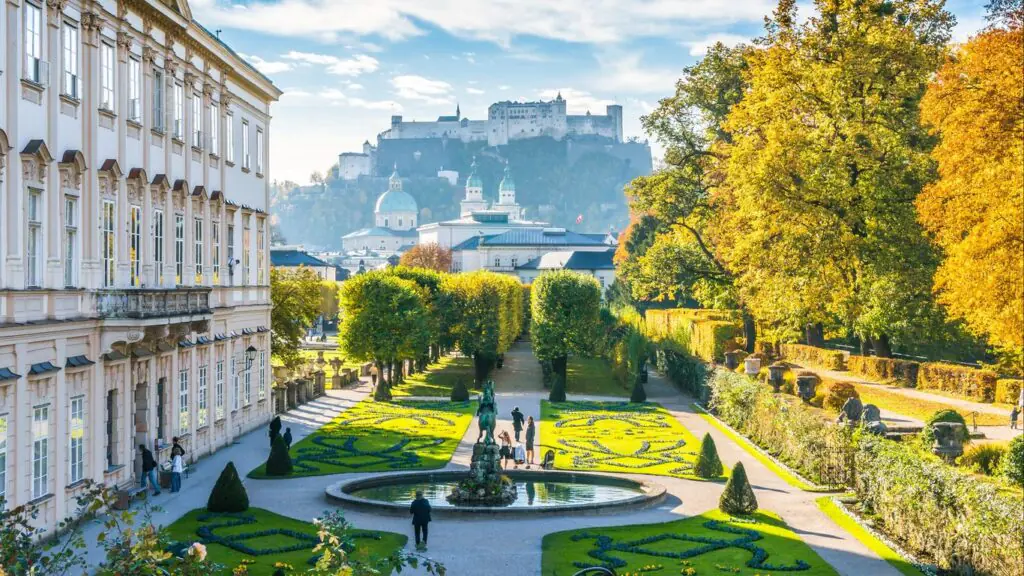
Ninety minutes southeast by rail (the regional trains run frequently and the Bayern-Ticket math often wins for groups), Salzburg compresses a baroque capital into a walkable core: the Old Town’s UNESCO lanes under the Hohensalzburg fortress, Mozart’s birthplace on the Getreidegasse’s wrought-iron-signed canyon, and the Mirabell Gardens aligning their parterres on the castle for the frame every camera finds.
The circuit: the funicular (or the earning walk) up to the fortress for the rooftop-and-Alps panorama, the cathedral quarter’s ensemble, the Getreidegasse taken early before the shopping density peaks, and the Mirabell ‘s Do-Re-Mi steps for those who came humming — the Sound of Music layer runs the gamut from the film-location coach tours (cheerfully committed kitsch, self-aware and enjoyable as such) to simply noticing the fountain. Café ritual is mandatory: the Sachertorte-versus-apple-strudel question resolves at a marble table, unhurried, coffee in the Viennese registers.
Day-trip hours suit the Old Town’s compactness perfectly, the fortress-plus-lanes-plus-café rhythm fills six hours without strain, and the deeper region — the lakes, the ice caves, the Eagle’s Nest — is for a Salzburg-based trip rather than this one. December’s Christkindlmarkt under the fortress is the seasonal upgrade. Full day, low logistics, high return.
Read the full Salzburg day-trip page.
The Beer Garden Law, the Glockenspiel Truth & Munich Itself
The rule that surprises everyone, stated first: in a genuine Bavarian beer garden, you may bring your own food — it’s the tradition’s founding deal, and locals arrive with cutting boards, radishes, and obazda while buying the beer (only the beer) from the house. The self-service areas mark where the rule lives; table-service sections mean menus. The institutions sort by taste: the Englischer Garten’s Chinesischer Turm for the classic, Hirschgarten for the world’s largest, Augustiner-Keller for the connoisseurs’ pour (wooden-barrel Edelstoff), and the Viktualienmarkt’s garden for the market graze beside it.
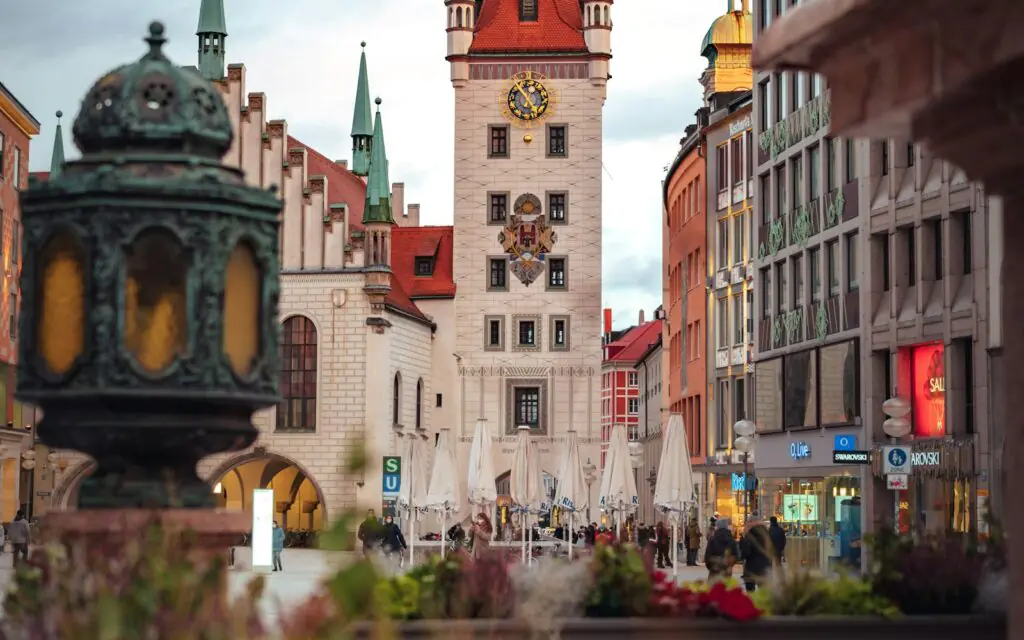
The Glockenspiel truth: the Marienplatz show (11 and 12 daily, plus 5 p.m. in season) is fifteen minutes of slow-motion figurines that history obliges you to watch exactly once — the better move is watching the crowd from a café balcony, then climbing St. Peter’s tower next door for the Alps-over-rooftops view worth the climb. The Residenz’s Antiquarium and the Asamkirche’s ten-meter-wide baroque explosion fill the monument hours; the Deutsches Museum eats a family day whole.
The living city: the Eisbachwelle’s river surfers run year-round at the English Garden’s gate (watch from the bridge; the wave is for the practiced), the Viktualienmarkt handles every food question, and the weisswurst protocol — before noon, with sweet mustard and a pretzel, skin off, never with ketchup — is enforced by tradition and waiters’ eyebrows. Season math: May–September is beer-garden season and the city at its best; Oktoberfest (mid-September to early October, note the month) triples prices and books the city solid a year out — attend deliberately with reserved tent knowledge or avoid knowingly; and December’s markets plus the surf wave in snowfall make the winter case better than expected.
Full day-trip pages: Regensburg.
Frequently Asked Questions
How early should you arrive for Neuschwanstein?
Be in Hohenschwangau village 1.5 to 2 hours before your tour slot — the castle is a 30–40 minute uphill walk, the bus and carriages queue, and a missed slot is gone. Book the official ticket shop ahead; same-day leftovers sell from 8 a.m. and vanish.
How should you plan Dachau?
As its own sober half-to-full day: free entry, S2 plus the 726 bus, three to four hours with the audio guide or a guided tour, restraint in photography, and nothing celebratory paired with it. The memorial discourages visits by young children.
What’s the best way to do the Zugspitze?
As a loop — cogwheel railway up, summit cable car to the top, the Eibsee cable car down (or reverse), on the combined ticket. Check the summit webcams that morning; the panorama is the point, and the jacket comes along in August.
Is Salzburg doable in a day from Munich?
Comfortably — ninety minutes each way by train for the fortress, the Getreidegasse, Mozart’s birthplace, and a proper café hour. The lakes and ice caves beyond are a Salzburg-based trip; the Old Town fits this one.
Can you really bring food to a beer garden?
Yes — in the self-service areas it’s the founding tradition: bring the picnic, buy the beer from the house. Locals arrive with radishes and obazda; the table-service sections are where menus apply.