Nuremberg from Munich
An hour on the fast train to Bavaria’s second city — imperial walls above, the rally grounds’ hard history across town, and the best small sausage in Germany between them.
The short version
- ICE trains cover Munich–Nuremberg in about an hour and run every half hour or so through the day — book at bahn.de. Regional trains take closer to two hours but ride on the cheap Bayern-Ticket.
- The Kaiserburg crowns the old town: €10 buys the full combination — palace, museum, Deep Well demonstration, and the Sinwell Tower climb — and under-18s enter free. The castle gardens cost nothing.
- Lunch is settled law here: Nürnberger Rostbratwürste, the finger-sized originals, three in a bun as a Drei im Weggla from a stand, or a dozen off the beechwood grill in a tavern.
- Give the afternoon to the Documentation Center at the former Nazi Party Rally Grounds — €7.50, with a free web-based audio guide while the main exhibition is rebuilt. It is the day’s serious hour, and the reason many come. Details at museums.nuernberg.de.
- Between the two, the old town itself: the Hauptmarkt and its Beautiful Fountain — spin the golden ring — Dürer’s half-timbered house below the castle, and St. Sebaldus. Most of this was rebuilt after 1945, and the city is plain about that.

Getting there
ICE trains run from München Hauptbahnhof to Nürnberg Hbf in about an hour, at least every half hour for most of the day, on the 300 km/h line north — book ahead for the cheapest fares. Regional trains take about an hour and 45 minutes and accept the Bayern-Ticket, which is the budget play for groups. From Nuremberg’s station, the old town starts across the ring road through the Königstor gate; the Documentation Center is a short tram or S-Bahn ride southeast to Dutzendteich.
The day
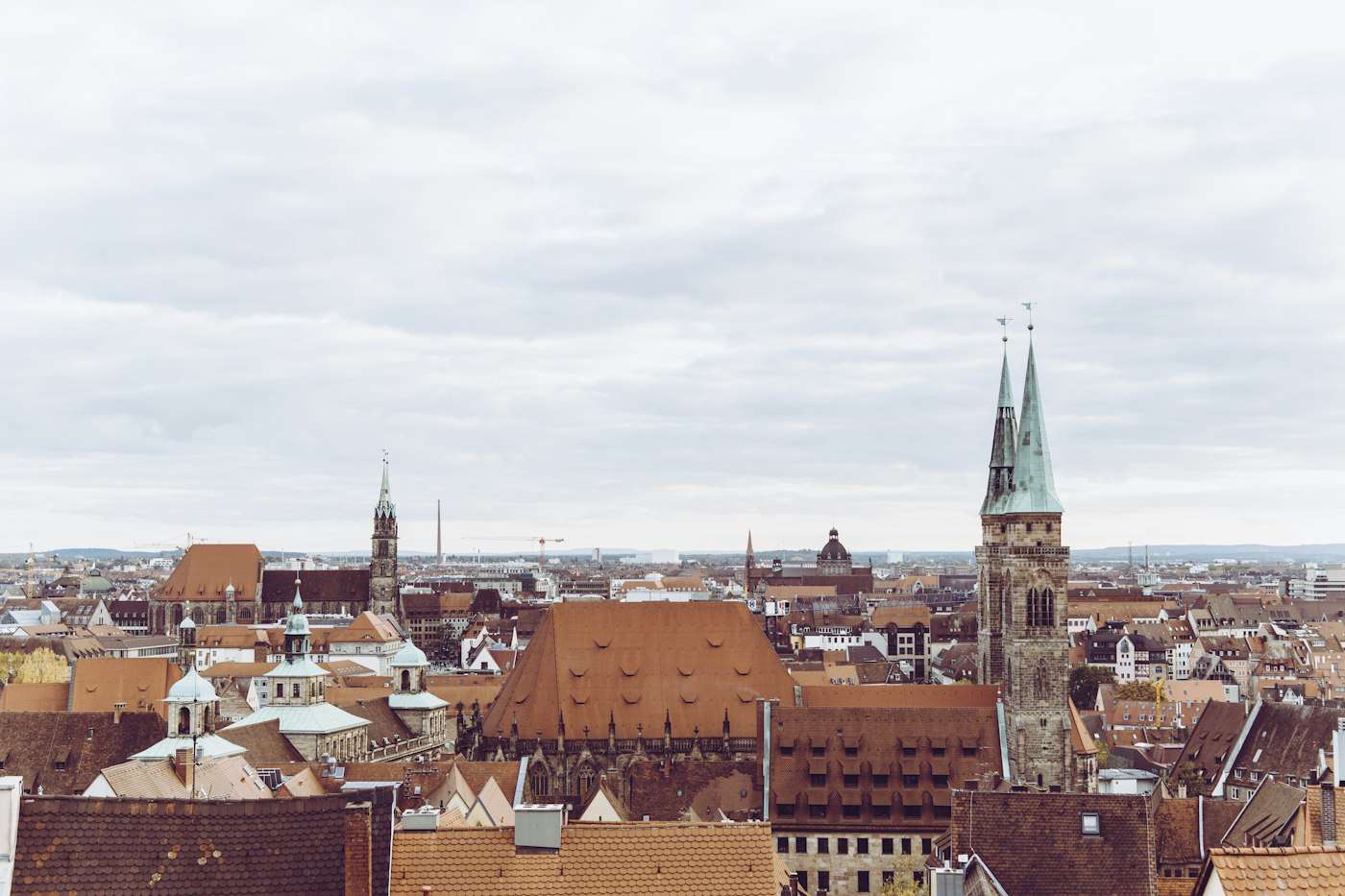
Walk in through the Königstor and up the spine of the old town: the Handwerkerhof by the gate, then the Hauptmarkt, where the Schöner Brunnen’s gilded tiers carry a brass ring that visitors spin for luck. Climb to the Kaiserburg before midday — emperors held court here for five centuries, and the Sinwell Tower gives the full red-roofed sweep of the city. Albrecht Dürer’s house stands just below the castle walls, a half-timbered museum to Germany’s greatest Renaissance artist. Lunch on Rostbratwürste, then take the tram to Dutzendteich for the Documentation Center at the former rally grounds. The interim exhibition walks through how a civilized country staged its own seduction — Nuremberg was the Nazis’ chosen backdrop, and the city has chosen to explain rather than bury that. Walk out across the Zeppelin Field afterward; the scale is the lesson. Courtroom 600, where the 1945–46 trials answered what happened here, has its own memorial museum across town for those with another hour. Back through the old town for Lebkuchen — the gingerbread is a protected local craft — and the evening train.
When to go
Year-round city. December is its most famous season — the Christkindlesmarkt on the Hauptmarkt is Germany’s best-known Christmas market, and trains and hotels feel it. Summer gives the castle gardens and beer gardens their due; January and February are cold, quiet, and fine for a day built around museums. The Documentation Center closes for a couple of days in early November — check before a late-autumn trip.
Frequently Asked Questions
How long is the train from Munich to Nuremberg?
About an hour on ICE trains, which run at least every half hour. Regional trains take about 1 hour 45 minutes and are covered by the Bayern-Ticket, which saves money for groups of two or more.
What is the Drei im Weggla?
Three Nürnberger Rostbratwürste — the city’s small, marjoram-spiced, protected-origin sausages — in a bread roll, eaten standing up. It is the correct street lunch here and costs a few euros.
Is the Documentation Center worth it during renovation?
Yes. The interim exhibition with its free audio guide still covers the rally grounds’ history seriously, entry is €7.50, and the Zeppelin Field outside makes the point no exhibit can. Allow two hours including the tram ride out.
How much of the old town is original?
Honest answer: much of it is postwar reconstruction — Allied bombing in January 1945 destroyed most of the centre. The rebuild followed the old plan, the castle and key churches were restored, and the city documents the loss openly.
Castle or rally grounds if you must choose?
They answer different questions, and the day fits both. But if the history of the 20th century is why you came, the Documentation Center is the visit — give it the unhurried afternoon.